10 Places So Dark You’ll Finally See the Milky Way (and Briefly Question Your Place in the Universe)
Certified dark-sky reserves, observatory sleepovers and dome hotels where the night sky is the main event. Bring a jumper. Leave the phone torch off.
Intro
Confession: until I went to Tenerife for Starmus, the festival Brian May helped found to mix science, music and art, my relationship with the night sky was mostly “is that a star or a plane?” Then you stand up on Teide after dark and realise the sky has been putting on this show the whole time and you just couldn’t see it over the streetlights.
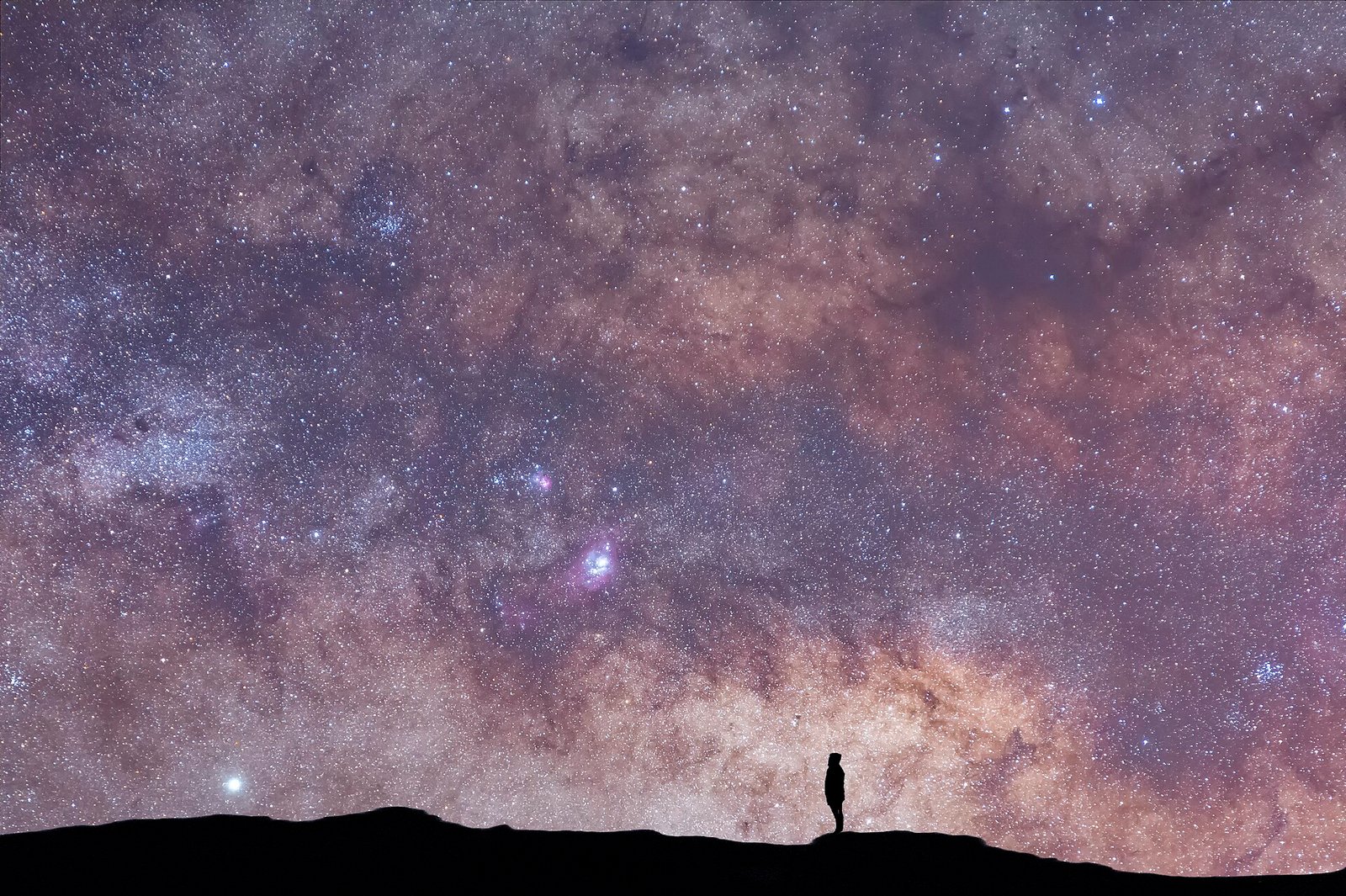
That’s the whole point of astrotourism. Around 80% of people on Earth live under light-polluted skies (that’s the figure from the 2016 World Atlas of artificial night sky brightness), so seeing the Milky Way properly is now something you travel for. The good news: places certified by DarkSky International and the Starlight Foundation are protected from light pollution, have proper observatories, and in several cases, a bed with a view of Saturn.
How we picked: every destination holds a real dark-sky certification (DarkSky International or the Starlight Foundation), checked on the official sites in October 2026. We leaned toward lesser-known picks and paired each one with a specific stay or stargazing experience. No star ratings or prices unless the official source published them. Tip for all of them: go near the new moon.
1. Teide National Park, Tenerife (Canary Islands, Spain)

The hook: Sleep at 2,150 metres inside a volcano’s national park, then step outside to a sky the professional astronomers chose on purpose.
Tenerife’s high peaks sit above the cloud layer, which is why the Teide Observatory is up here and why the Canaries are basically the European capital of looking up. The area is a Starlight Reserve, protected by a law limiting light pollution, and La Palma next door was the first Starlight Reserve anywhere. This is also Starmus country: the festival has brought astronauts, Nobel laureates and rock stars to the island, and it’s hard to leave without catching the bug.
The move is the Parador de Las Cañadas del Teide, the only hotel inside the national park and the first Parador with Starlight certification. It has telescopes on site and runs astronomy sessions (check the current schedule on the official site). Day trippers drive back down to the coast. You’ll be the smug one already up there with dinner and a sky full of stars.
Key Features
- Only hotel inside Teide National Park, at about 2,150 m
- First Starlight-certified Parador
- Above the cloud layer, home of the Teide Observatory
- Starmus festival connection
- La Palma (first Starlight Reserve) a short hop away
- Getting there: Fly to Tenerife South (TFS) or North (TFN), then drive up into the park
Best For: Anyone who wants a volcano by day, galaxies by night, and a beach trip on the same holiday
Visit / Book: Book the Parador de Las Cañadas del Teide
2. Dark Sky Alqueva (Alentejo, Portugal)

The hook: The world’s first Starlight Tourism Destination is two hours from Lisbon and comes with wine. Sorry, other galaxies.
Dark Sky Alqueva was the first place in the world certified as a Starlight Tourism Destination, and it now stretches over more than 10,000 km² around Europe’s biggest artificial lake, crossing the border into Spain. The official observatory is in the tiny village of Cumeada, near Reguengos de Monsaraz, and runs guided stargazing sessions of about 1 hour 15 minutes with proper telescopes (book ahead).
By day it’s pure Alentejo: the hilltop village of Monsaraz, river beaches on the lake, cork oaks and lots of wineries. Stay right in Cumeada at Casa da Cumeada, a small rural guesthouse, so the walk home from the telescopes is short enough to manage in the dark.
Key Features
- First certified Starlight Tourism Destination in the world
- Official observatory in Cumeada with guided sessions
- Medieval Monsaraz and the Alqueva lake
- Alentejo wine country
- Partner guesthouses minutes from the observatory
- Getting there: About 2 hours by car from Lisbon
Best For: Lisbon-based or Portugal-curious stargazers who want stars, wine and zero airport stress
Visit / Book: Book a Dark Sky Alqueva session
3. Sark (Channel Islands)

The hook: No cars, no streetlights, one island. Sark basically won dark-sky status by refusing to modernise, and honestly, icons only.
Sark became the world’s first Dark Sky Island in 2011, and it wasn’t hard: there are no public streetlights and no cars, just tractors, bikes and horse-drawn carriages. The local astronomy society runs the Sark Observatory, a roll-off-roof hut with a 12-inch telescope, reached by a torchlit walk across a field from St Peter’s Church.
Sessions are small (about eight people), last one to two hours and cost £10 per adult, according to the island’s holiday cottage booking page. Come in autumn, winter or spring: in midsummer it doesn’t get properly dark until after 10pm. Stay in a cottage or guesthouse and plan on at least two nights, because the British weather does not care about your astronomy plans.
Key Features
- World’s first Dark Sky Island (2011)
- No public streetlights and no cars
- Sark Observatory with 12-inch telescope
- Small-group sessions, book ahead
- Annual Starfest with guest speakers
- Getting there: Ferry from Guernsey (about 50 min, verify)
Best For: Romantic weirdos who want a car-free island and a Milky Way with their cream tea
Visit / Book: Plan a stargazing visit to Sark
4. Pic du Midi (Hautes-Pyrénées, France)

The hook: Sleep in a working observatory at 2,877 metres. The rooms are spartan, the waitlist is long, and you will not care.
The Pic du Midi International Dark Sky Reserve has an observatory on a mountain peak that you reach by cable car from La Mongie. The famous “Nuit au sommet” puts you in the old researchers’ rooms with sunset, a regional dinner, guided observation through a 400 mm telescope in the Charvin dome, and a peek at the scientific domes next morning.
Now the catch. The official ticket page says summit nights are taking bookings from January 2028, and doubles start at €599 for the room. If you can’t wait that long, the new Hôtellerie des Laquets at 2,620 m (France’s highest hotel, per the operator) is bookable now, also from €599. There’s also a planetarium at the top for the rest of us.
Key Features
- Observatory sleepover at 2,877 m
- Guided observation in the Charvin dome
- Dinner, sunset and sunrise included
- Highest planetarium in Europe (per Pic du Midi)
- New Hôtellerie des Laquets as a fallback
- Getting there: Fly to Lourdes/Tarbes (LDE) or Toulouse (TLS), drive to La Mongie, then cable car
Best For: Planners who book far ahead and want a once-in-a-lifetime night above the clouds
Visit / Book: See Nuit au sommet options
5. Kerry International Dark Sky Reserve (Ireland)

The hook: Gold tier skies, Atlantic waves and a pint after. It’s the Ring of Kerry’s night shift.
The Kerry International Dark Sky Reserve on the Iveragh Peninsula got its Gold Tier designation in 2014, the highest rating DarkSky International gives. The skies above the Skellig coast are seriously dark, and the area mixes astronomy with archaeology: local guides at Kerry Dark Sky Tourism run small-group tours to dark beaches and ancient sites, and teach you to star-hop like a pro.
For a stay, the guides’ own list of accommodation near the reserve includes guesthouses around Caherdaniel and Portmagee, plus Dromid Hostel near Waterville, which says it has two telescopes for guests. Pack layers. Coastal Irish nights are colder than they look on Instagram.
Key Features
- Gold Tier International Dark Sky Reserve (2014)
- Guided small-group tours mixing stars and archaeology
- Skellig coast and Ring of Kerry by day
- Skellig Coast Dark Sky Festival
- Accommodation list on the tour operator’s site
- Getting there: Fly to Kerry (KIR) or Cork (ORK), then drive
Best For: Road trippers who want the Ring of Kerry plus a night sky that actually lives up to the hype
Visit / Book: Book a Kerry Dark Sky tour
6. Mont-Mégantic (Québec, Canada)

The hook: The world’s very first International Dark Sky Reserve, three hours from Montreal, with an astronomy centre and a maple-syrup-adjacent vibe.
Mont-Mégantic became the world’s first International Dark Sky Reserve in 2007, and it’s still a professional observatory site. At the base of the mountain, the ASTROLab astronomy centre runs exhibits by day and evening astronomy activities. The national park around it has hiking trails, so you can earn your sky.
There’s no hotel at the observatory, so stay in the national park (camping and cabins run by Sépaq, check availability) or in the nearby village of Notre-Dame-des-Bois. Autumn is a strong time to go: fall colours by day, crisp clear skies at night.
Key Features
- First International Dark Sky Reserve in the world (2007)
- ASTROLab astronomy centre
- Mont-Mégantic national park hiking
- Camping and cabins in the park
- Fall foliage season bonus
- Getting there: About 3 hours by car from Montreal (verify)
Best For: Montreal and New England road trippers who want stars with a side of fall leaves
Visit / Book: Plan a visit to the Mont-Mégantic reserve
7. Elqui Valley (Coquimbo, Chile)

The hook: Sleep in a geodesic dome with an opening roof in the valley where the world’s astronomers keep their telescopes. Plus pisco. Lots of pisco.
Northern Chile has some of the clearest skies on Earth, which is why professional observatories cluster here. The Gabriela Mistral Dark Sky Sanctuary, a 364 km² observatory site named after the Nobel-winning poet who grew up in the valley, became the world’s first DarkSky Sanctuary in 2015.
Elqui Domos, just outside Pisco Elqui, puts you in geodesic domes with a loft bed, a removable roof and telescopes, and runs guided stargazing with astronomers. There’s also an outdoor hot tub, which means you can technically do astronomy in a bath. Visiting the professional observatories nearby is possible on organised tours (check what’s open when you go).
Key Features
- Near the first DarkSky Sanctuary (2015)
- Dome rooms with removable roofs
- Guided astronomy with professional equipment
- Hot tub under the stars
- Pisco distilleries and vineyards in the valley
- Getting there: Fly to La Serena (LSC), then about 2 hours by car (verify)
Best For: Bucket-list stargazers who want the southern sky, Magellanic Clouds and all
Visit / Book: Book Elqui Domos
8. NamibRand Nature Reserve (Namibia)

The hook: Africa’s first International Dark Sky Reserve, where each room has its own open-air stargazing room. Yes, a room just for stars.
NamibRand became Africa’s first International Dark Sky Reserve in 2012, with Gold Tier status. It’s one of the continent’s largest private nature reserves, in the south-west Namib Desert, and it keeps tourism tiny: the rules cap guest beds at one per 1,000 hectares.
At Kwessi Dunes Lodge, each bedroom has a separate stargazer room open to the sky. The Wolwedans Collection’s guides are trained in astronomy and will show you Jupiter and Saturn between stories about the constellations. Add a hot-air balloon flight over the dunes and you’ve done the sky by day too.
Key Features
- Africa’s first International Dark Sky Reserve (Gold Tier, 2012)
- Strict cap on guest beds
- Kwessi Dunes stargazer rooms
- Astronomy-trained guides at Wolwedans
- Hot-air ballooning over the dunes
- Getting there: Fly to Windhoek (WDH), then a long drive or light aircraft transfer
Best For: Big splurge honeymooners and desert lovers who want silence, dunes and the full Milky Way
Visit / Book: See NamibRand lodges
9. Aoraki Mackenzie (South Island, New Zealand)

The hook: Turquoise lakes by day, the southern Milky Way by night, and possibly the most photogenic church in the hemisphere.
The Aoraki Mackenzie International Dark Sky Reserve covers the Mackenzie Basin and Aoraki/Mount Cook National Park, and earned Gold Tier status in 2012. Lake Tekapo is the easy base: the Dark Sky Project runs tours up to the University of Canterbury’s Mount John Observatory, and the little Church of the Good Shepherd under the stars is the photo everyone wants.
This is the most famous pick on the list, so book tours early, especially in New Zealand’s winter (June to August), when nights are long and clear. There are plenty of motels and lodges around Tekapo village.
Key Features
- Gold Tier International Dark Sky Reserve (2012)
- Mount John Observatory tours
- Lake Tekapo and Aoraki/Mount Cook
- Church of the Good Shepherd night photos
- Long winter nights June to August
- Getting there: About 3 hours by car from Christchurch (CHC) (verify)
Best For: Astrophotographers and road trippers doing the South Island properly
Visit / Book: Book with Dark Sky Project
10. Cherry Springs State Park (Pennsylvania, USA)

The hook: The East Coast’s best-kept stargazing secret: a hilltop field in the woods that’s so dark people drive hours to sit in it.
Cherry Springs is a remote state park in north-central Pennsylvania and a designated International Dark Sky Park. It’s famous among East Coast astronomers because it’s one of the darkest spots within a day’s drive of New York, Philadelphia and DC. The Overnight Astronomy Observation Field is set up for serious stargazers, with rules on white lights, and there’s a public viewing area for everyone else.
Accommodation is basic and that’s the point: there’s a campground in the park, or you can book a cabin or B&B in the surrounding Potter County towns. Check the park’s light rules before you go, since one rogue headlight will make you very unpopular.
Key Features
- International Dark Sky Park
- Dedicated overnight astronomy field
- Public stargazing area
- Campground in the park
- Within a long day’s drive of NYC, Philly and DC
- Getting there: Drive (no public transport); allow around 5 to 6 hours from NYC (verify)
Best For: East Coasters who want a proper Milky Way without a flight
Visit / Book: Plan a visit to Cherry Springs
Quick Selection Guide
| If you want… | Go to |
|---|---|
| A volcano, a Starmus connection and a hotel inside the park | Teide, Tenerife |
| Stars and wine two hours from Lisbon | Dark Sky Alqueva, Portugal |
| A car-free island with no streetlights | Sark, Channel Islands |
| To sleep in an actual observatory | Pic du Midi, France |
| Gold Tier skies and a Ring of Kerry road trip | Kerry, Ireland |
| The original dark-sky reserve | Mont-Mégantic, Québec |
| A dome hotel under the southern sky | Elqui Valley, Chile |
| A private stargazing room in the desert | NamibRand, Namibia |
| The most photogenic night sky in the south | Aoraki Mackenzie, New Zealand |
| The East Coast’s darkest field | Cherry Springs, Pennsylvania |
Affiliate note: links go to official sites. Swap in tracked hotel links once a travel affiliate program is set up.
Prices and booking details change. Always check live before you book.