The Nature Shows So Wild You'll Swear Someone Photoshopped Them

Updated October 2026
Glowing caves, a bay that sparkles when you paddle, waves the size of office buildings and a road closed for crabs. Here’s when to go, how to actually see them, and where to sleep nearby.
Intro
Some trips are about a place. These are about a moment. A few weeks a year (sometimes a few minutes a day), nature puts on a show so strange that your camera roll will look fake to everyone back home.
The catch? Timing is everything. Miss the window and you get a nice lake, a dark cave or a beach full of very normal sand. So for every pick below we’ve done the boring part for you: the season, the rules, what real travelers love, what they grumble about, and a specific hotel close enough that you can roll out of bed and catch the action.
How we picked: Each phenomenon had to be real, repeatable and visitable by normal humans (no research vessels needed). Dates, prices and rules come from official park, tourism or operator websites. Traveler opinions are paraphrased from public Reddit threads and review sites. Nature doesn’t take bookings, so nothing here is guaranteed.
1. Waitomo Glowworm Caves (New Zealand)

The hook: A cave ceiling covered in thousands of tiny blue lights. And they’re alive.
Underneath the green farmland of New Zealand’s North Island, the Waitomo Glowworm Caves hide one of the strangest night skies on Earth. The “stars” are glowworms, the larvae of a fungus gnat found only in New Zealand, and they glow blue-green to lure insects into sticky silk threads hanging from the ceiling. Romantic? Sort of. Unforgettable? Absolutely.
The classic tour is a guided walk through the limestone chambers, followed by a silent boat ride through the Glowworm Grotto, where everyone goes quiet because the ceiling is doing all the talking. According to the official site, the standard tour is about 45 minutes and adult tickets are NZ$81, with a family pass at NZ$207. Booking ahead is strongly recommended.
What travelers rave about: That first look up from the boat. People on Reddit describe it as genuinely magical, even if they’d seen photos.
Honest complaints: The main cave is busy and the boat section is short. Several travelers say the quieter alternatives nearby, like Spellbound (small groups and a longer boat ride), feel more personal. Some locals think the main cave is overpriced for the time inside.
Key Features
- Guided walk plus silent boat ride through the Glowworm Grotto
- Adult ticket NZ$81, family pass NZ$207 (official site)
- Year-round, with smaller-group alternatives in the same area
- Roughly a 2.5 to 3-hour drive from Auckland
Best For: Couples, families and anyone who wants a “how is this real” moment without hiking or freezing.
Official site: Visit Waitomo Glowworm Caves
Stay at Waitomo Caves Guest Lodge, a short walk from the caves in Waitomo village.
Book: Check prices at Waitomo Caves Guest Lodge
2. Mosquito Bay, Vieques (Puerto Rico)

The hook: The bay that lights up electric blue every time your paddle touches the water.
Mosquito Bay on the small island of Vieques is often called the brightest bioluminescent bay in the world. Microscopic organisms in the water flash blue when they’re disturbed, so every paddle stroke, fish and trailing hand leaves a glowing streak. It’s like kayaking through a screensaver.
Visits are by guided, non-motorized tour only (kayak or electric boat), and swimming is not allowed. Operators ask you to skip sunscreen and DEET before you go so you don’t harm the organisms. Tours pause around the full moon, and the darker the night, the brighter the glow, so try to book near a new moon. Discover Puerto Rico notes Mosquito Bay is one of three bio bays on the island; it’s the one people fly in for.
What travelers rave about: On a dark night, people say the glow beats every photo they’d seen. Clear-bottom kayaks get a lot of love.
Honest complaints: Getting to Vieques takes planning. Reddit threads warn that trying to do an evening tour and catch the last ferry back the same night is cutting it close, so most people recommend staying over.
Key Features
- Guided kayak or electric boat tours only, no swimming
- Best on dark, moonless nights; tours pause around the full moon
- Reached by ferry or short flight to Vieques
- No sunscreen or bug spray before your tour
Best For: Night owls, couples and anyone who wants the most Instagram-defying hour of their Caribbean trip.
Official site: Visit Discover Puerto Rico: Bio Bays
Stay at Hacienda Tamarindo, a well-reviewed small hotel about five minutes from Esperanza, where most bio bay tours start.
Book: Check prices at Hacienda Tamarindo
3. Nazaré’s Giant Waves (Portugal) 🇵🇹

The hook: Watch surfers ride waves the size of apartment buildings from a clifftop fort.
Nazaré used to be a quiet fishing town. Then the world noticed what happens at Praia do Norte in winter. A deep underwater canyon funnels Atlantic swell toward the beach, and on the right days the waves get absolutely enormous. Big-wave surfers come from everywhere, and so do the crowds watching them.
The best seat in the house is the red lighthouse at the Fort of São Miguel Arcanjo, perched right above the break. The municipal listing puts entry to the fort at €1, open daily 10:00 to 18:00. The big-wave season runs roughly October to March, and the official Nazaré waves site says the 2026/27 TUDOR Nazaré Big Wave Challenge window is 1 November 2026 to 31 March 2027, with the actual contest day called only when conditions line up.
This is our Portugal pick, and it’s an easy one: about 90 minutes from Lisbon, with grilled fish and a funicular as bonuses.
What travelers rave about: The sheer scale. Even on “normal” big days, people say photos don’t capture how loud and huge it is.
Honest complaints: You can’t book a giant wave. Surfers on Reddit say the trick is watching swell forecasts and webcams a couple of days out, and coming back if the ocean isn’t playing. Big days also mean big crowds on the cliff.
Key Features
- Clifftop viewing from the Fort of São Miguel Arcanjo (€1 entry)
- Season roughly October to March
- 2026/27 big-wave contest window: 1 November to 31 March
- Easy day trip or overnight from Lisbon
Best For: Adrenaline fans, photographers and anyone already in Portugal this winter.
Official site: Visit Praia do Norte and the Fort
Stay at Hotel Miramar Sul in Nazaré, a short drive or funicular ride from the lighthouse.
Book: Check prices at Hotel Miramar Sul
4. Salar de Uyuni’s Mirror (Bolivia)

The hook: The world’s biggest salt flat turns into a sky-sized mirror after the rains.
Salar de Uyuni is already surreal in the dry season: blinding white salt to the horizon. But after rain, a thin layer of water sits on top and the whole thing becomes a mirror. Clouds above, clouds below, and you standing in the middle wondering which way is up.
Most travel guides put the best mirror odds from late January to March, with February the classic month (and the busiest). In the dry months you get the hexagon-patterned crust and easier access to spots like Isla Incahuasi instead. Reflections depend on recent rain and wind, so even in season it’s worth checking conditions with your tour operator.
What travelers rave about: The mirror photos, obviously. Many people on Reddit also say the multi-day tours through the lagoons, flamingos and hot springs beyond the salt flat were the real highlight.
Honest complaints: Altitude, long jeep days and cold nights. Peak mirror season is also peak crowd and price season.
Key Features
- Mirror effect most likely late January to March
- Dry season (roughly May to October) for the patterned salt crust
- Day trips and multi-day jeep tours from the town of Uyuni
- High altitude, so take acclimatizing seriously
Best For: Photographers, adventurous couples and anyone who wants the most unbelievable photo of their life.
Official site: Visit Palacio de Sal (official site)
Stay at Palacio de Sal, a hotel built from salt on the edge of the salt flat, about 25 km from Uyuni.
Book: Check prices at Palacio de Sal
5. Monarch Butterfly Reserves (Mexico)

The hook: Millions of orange butterflies covering the trees like living autumn leaves.
Every year, monarch butterflies travel from the US and Canada to spend the winter in the fir forests of central Mexico. The Monarch Butterfly Biosphere Reserve, a UNESCO World Heritage site, protects their main overwintering grounds. When the sun warms them up, the air fills with wings. People describe hearing them, which sounds made-up until you’re there.
The season runs roughly November to March. El Rosario is the biggest and busiest sanctuary, and Sierra Chincua is a bit gentler on the legs. Local press reported 2026/27 entry at 150 pesos for adults and 100 for children at both, with horses available for part of the uphill walk. Day tours run from Mexico City (expect a long day), or you can stay nearby.
What travelers rave about: The moment the butterflies all lift off at once. Several Reddit travelers called it one of the best things they’ve done in Mexico.
Honest complaints: It’s a long drive from Mexico City and a steep, high-altitude walk. Nearby towns have simple lodging, not luxury.
Key Features
- UNESCO World Heritage biosphere reserve
- Season roughly November to March
- Main sanctuaries: El Rosario and Sierra Chincua
- Day trips from Mexico City or overnight in Angangueo
Best For: Nature lovers, families with older kids and anyone who wants their mind blown without leaving land.
Official site: Visit the Monarch Butterfly Biosphere Reserve (UNESCO)
Stay at Hotel Don Bruno in Angangueo, the closest town base for El Rosario and Sierra Chincua.
Book: Check prices at Hotel Don Bruno
6. The Red Crab Migration, Christmas Island (Australia)

The hook: An entire island where the roads close because millions of crabs are walking to the beach.
Christmas Island is a remote Australian territory in the Indian Ocean, and once a year its red crabs march from the forest to the sea to breed. Parks Australia closes roads, builds crab bridges and generally lets the crabs have the right of way. Imagine your commute, but red and crunchy.
The migration usually starts with the first big rains of the wet season, typically between October and January. A local operator lists predicted 2026 spawning dates of 4 to 6 November and 5 to 6 December, plus 2 to 3 January 2027, with the walk to the coast starting weeks earlier. Getting there means flights via Perth, and accommodation is limited, so book early.
What travelers rave about: The sheer number of crabs. It’s one of those sights that’s hard to believe until you’re stepping around them.
Honest complaints: It’s remote, it’s not cheap to reach, and the timing depends on the rain. There aren’t many places to stay.
Key Features
- Run by Christmas Island National Park (Parks Australia)
- Migration usually between October and January
- Predicted 2026 spawning dates published by local operators
- Limited flights and rooms, so plan early
Best For: Wildlife fans, serious travelers chasing “rarest trip in the group chat” status.
Official site: Visit Christmas Island National Park: Red Crab Migration
Stay at The Sunset, a well-reviewed hotel in the Settlement area with ocean views.
Book: Check prices at The Sunset
7. Horsetail Fall “Firefall,” Yosemite (USA)

The hook: For a few days in February, a waterfall glows like lava at sunset.
Horsetail Fall is a thin seasonal waterfall on the side of El Capitan. In mid to late February, if the water is flowing and the sky is clear at sunset, the setting sun lights it up orange and red so it looks like molten fire pouring down the cliff. Photographers plan their whole year around it.
The National Park Service runs a designated viewing setup each year. For February 2026, the park said no reservation was required to enter Yosemite or visit the viewing area, which sat near El Capitan Picnic Area, about a 1.5-mile walk each way from Yosemite Falls parking. Rules change year to year, so check the official page before February 2027.
What travelers rave about: When it works, people say it’s even better than the photos.
Honest complaints: It often doesn’t work. One cloud on the horizon and the show is off. Reddit regulars suggest treating it as a bonus on a winter Yosemite trip, not the whole reason for it, and going on a weeknight to dodge the biggest crowds.
Key Features
- Usually mid to late February, weather permitting
- Designated viewing area with walk-in access
- Free shuttle and parking info on the NPS site
- Bring layers, traction and a headlamp
Best For: Photographers and anyone who already loves Yosemite in winter.
Official site: Visit NPS: Horsetail Fall
Stay at The Ahwahnee, the historic lodge in Yosemite Valley, so you’re already inside the park at sunset.
Book: Check prices at The Ahwahnee
8. Synchronous Fireflies, Great Smoky Mountains (USA)

The hook: Thousands of fireflies blinking in sync, like the forest is breathing.
At Elkmont in Great Smoky Mountains National Park, one firefly species does something unusual: the males flash together in waves. Sit in the dark forest and the whole hillside pulses on and off. It’s soft, eerie and completely silent.
It’s so popular the park runs a lottery. For 2026, the National Park Service said viewing ran 20 to 27 May, the Recreation.gov lottery cost $1 to enter, and winners paid $29 for a vehicle pass for a specific night. Watch for the 2027 lottery announcement around April.
What travelers rave about: The first wave of synchronized flashes. People say it’s like nothing else in nature.
Honest complaints: It’s crowded, and not everyone follows the no-white-light rules. A frustrated local thread complained the atmosphere wasn’t as peaceful as expected. Some people suggest going just before or after the official event week.
Key Features
- Viewing event in late May or early June, via lottery
- $1 to apply; vehicle pass fee for winners (2026: $29)
- Red-covered flashlights only, and only while walking
- Gatlinburg is the nearest big town base
Best For: Nature nerds, families and anyone who still believes in a little magic.
Official site: Visit NPS: Synchronous Fireflies
Stay at The Lodge at Buckberry Creek, a mountain lodge in Gatlinburg, a short drive from the park entrance.
Book: Check prices at The Lodge at Buckberry Creek
9. Frozen Methane Bubbles at Abraham Lake (Canada)

The hook: A frozen lake full of white bubbles stacked like a lava lamp on pause.
Abraham Lake is a man-made reservoir in the Canadian Rockies of Alberta. In winter, gas from decaying plants on the lakebed rises and freezes into the ice, so you get stacks of white bubbles suspended under perfectly clear, wind-polished ice. Lie down on it and you’ll feel like you’re floating.
Local guides say the classic bubble window is mid to late January into early February, though conditions change constantly. Ice safety matters: guides warn against river inlets and slushy or cracked ice, and recommend traction cleats and a guided walk if you’re unsure. Travel Alberta pitches Nordegg as the winter base.
What travelers rave about: That clear black ice and the bubbles underneath. Even in autumn, without bubbles, the lake gets plenty of photo love on X. Local photographers like @danschyk and @ratzlaff have posted the lake this season.
Honest complaints: The wind. Travelers say it’s brutally cold and gusty, and it’s a long drive from Banff. Fresh snow can also hide the bubbles.
Key Features
- Best bubble viewing typically mid-January to early February
- Clear ice viewing spots along the David Thompson Highway
- Guided ice walks available from Nordegg
- Bring microspikes, layers and sunglasses
Best For: Photographers and winter lovers who don’t mind a face full of wind.
Official site: Visit Travel Alberta: Nordegg in Winter
Stay at Aurum Lodge, a small lodge near the shore of Abraham Lake.
Book: Check prices at Aurum Lodge
10. The Lagoons of Lençóis Maranhenses (Brazil)

The hook: Endless white sand dunes with turquoise swimming lagoons in between.
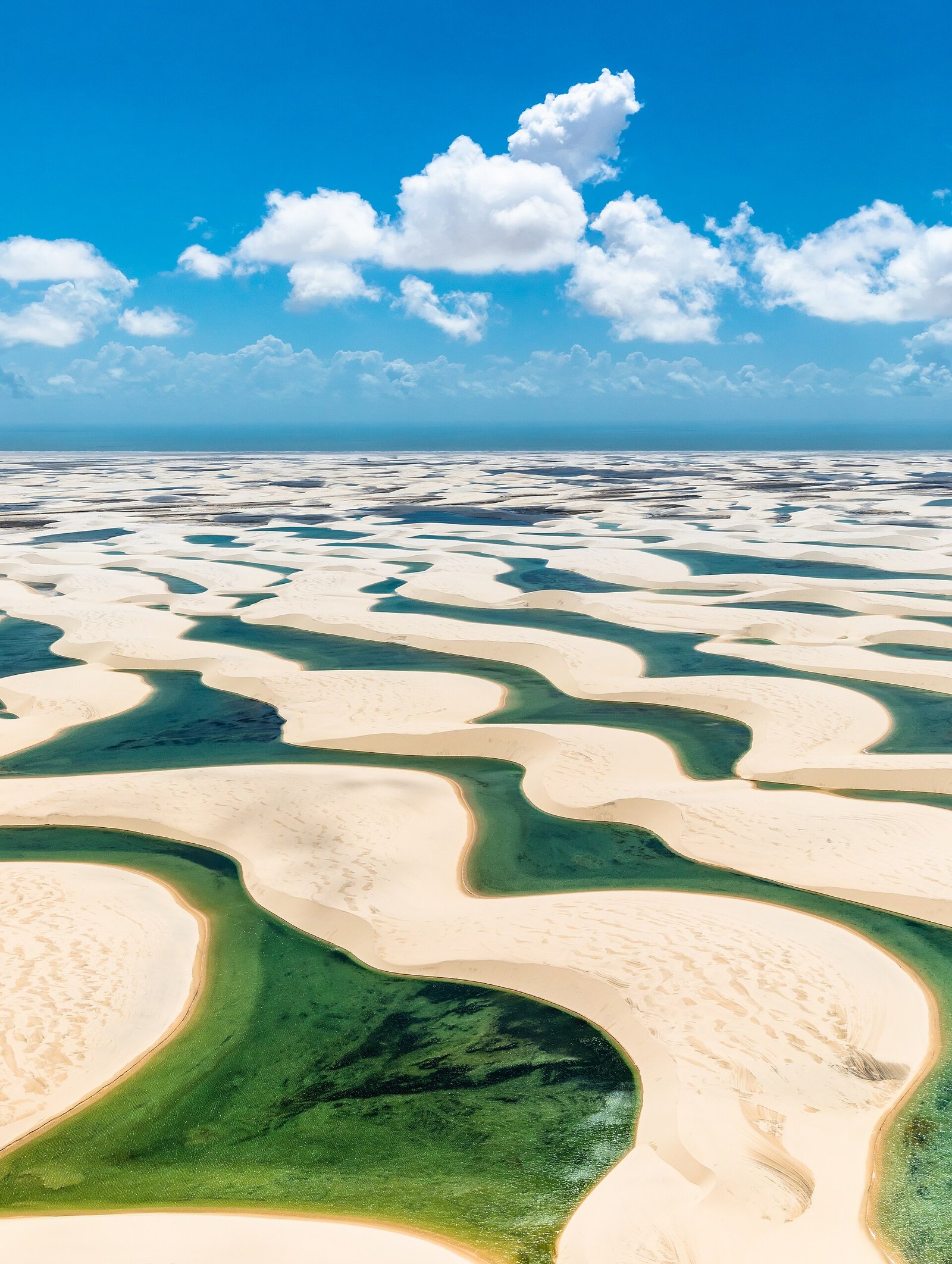
Lençóis Maranhenses National Park in northern Brazil looks like a desert, but it isn’t one. Rain fills the hollows between the dunes, and for part of the year you get thousands of clear blue and green lagoons scattered across white sand. UNESCO added it to the World Heritage list in 2024.
Most guides say the lagoons are fullest from around May to September, with July the peak (and busiest) month. The town of Barreirinhas is the main base, with jeep tours heading out into the dunes.
What travelers rave about: Swimming in warm lagoons in the middle of the dunes. Reddit travelers say it’s even better in person.
Honest complaints: Getting there takes time (usually via São Luís), and you’ll want a few days on the ground. Peak months get busy.
Key Features
- UNESCO World Heritage site since 2024
- Lagoons fullest around May to September
- Jeep tours from Barreirinhas
- Allow at least three days
Best For: Beach lovers who want something completely different, and anyone who’s seen the photos and needs to know if they’re real (they are).
Official site: Visit UNESCO: Lençóis Maranhenses National Park
Stay at Porto Preguiças Resort in Barreirinhas, a highly rated base for dune tours.
Book: Check prices at Porto Preguiças Resort
Notable Mentions
- Abraham Lake on X: Photographer Dan (@danschyk) shared a photo simply captioned “Abraham Lake” in October 2026, and Chris Ratzlaff (@ratzlaff) posted that the lake was “VERY colourful” in late September. Proof it’s worth the drive in any season.
Quick Selection Guide
| Phenomenon | Where | When to go | Best for |
|---|---|---|---|
| Glowworm caves | Waitomo, New Zealand | Year-round | Easy wow moment |
| Bioluminescent bay | Vieques, Puerto Rico | Dark nights, avoid full moon | Couples, night owls |
| Giant waves | Nazaré, Portugal 🇵🇹 | October to March | Adrenaline, day trip from Lisbon |
| Salt flat mirror | Uyuni, Bolivia | Late January to March | Photographers |
| Monarch butterflies | Michoacán, Mexico | November to March | Nature lovers |
| Red crab migration | Christmas Island, Australia | October to January | Wildlife fans |
| Firefall | Yosemite, USA | Mid to late February | Photographers |
| Synchronous fireflies | Smokies, USA | Late May or early June (lottery) | Families |
| Frozen bubbles | Abraham Lake, Canada | Mid-January to early February | Winter lovers |
| Dune lagoons | Lençóis Maranhenses, Brazil | May to September | Beach lovers |
Pick one, put the dates in your calendar and start manifesting. Nature’s running the show, but you can at least get a good seat.
Details and prices checked on official websites in October 2026. Where no official price was available, we say so. Prices, schedules and offers change, so check the official site before you go. Some links are affiliate links, which means we may earn a commission at no extra cost to you. This article is general travel information, not medical or safety advice.