Someone on X Said Travel Is "Just Consumption." Science Has Entered the Chat
A viral post called travel “just another form of consumption, like watching TV.” We love a hot take, so we went to the research. Here are 10 real, linked studies on what travel does to your happiness, your heart, your creativity and how you see other people, plus a trip to take for each one.
Intro
Updated October 29, 2026
This post contains affiliate links. If you book through them, The Listicle Queen may earn a small commission at no extra cost to you. Every study below is linked so you can read it yourself.
⭐ Our Top Pick
If you only take one idea from this list, take reason 2: the planning is part of the payoff. Researchers found that people looking forward to a trip were happier than people with no trip planned. So book something, even something small, today. Our pick for a trip worth anticipating is a northern lights stay in Finnish Lapland. Check rates at Arctic TreeHouse Hotel
Last week, X user @zectrillionaire posted a spicy take that travel is nothing special anymore. In their view, it’s “just another form of consumption, like watching TV,” and the world is turning into one big monoculture anyway. The post was quoting another viral post about who does and doesn’t travel, and it got well over 100,000 views and hundreds of replies.
Here’s the thing. We actually agree with part of it. Travel is not a personality, and a passport full of stamps doesn’t make anyone better than anyone else. Plenty of trips are just a hotel, a pool and a souvenir magnet, and that’s fine too.
But “just like watching TV”? That’s where the research disagrees, and politely, quite a lot. Psychologists, cardiologists and management researchers have spent decades studying what happens to people who travel, take vacations or live abroad. The results aren’t magic, and some of the effects fade faster than we’d like. Still, the evidence is clear that travel is not the same as sitting on the couch.
Reddit is split on this exact question, by the way. In threads on r/Anticonsumption and r/longtermtravel, plenty of people argue that packaged tourism, cruise stops and bucket-list box-ticking really can be consumerism in a different outfit. But the same threads keep drawing one line: slower travel, where you stay longer, talk to locals, try the language and get a little lost, feels very different from “consuming” a place. That’s the kind of travel most of the studies below are about.
How we picked: Every reason below is tied to a real, peer-reviewed study or meta-analysis, linked so you can read it. We describe findings in plain words and don’t add numbers the researchers didn’t report. Many of these studies show links, not proof of cause and effect, and we say so. Each reason comes with a destination and a specific, well-reviewed hotel that fits the idea.
This article is general information, not medical advice. Talk to your doctor about your own health.
| # | Reason | Study | Trip to try | Where to stay |
|---|---|---|---|---|
| 1 | Experiences beat things | Van Boven and Gilovich, 2003 | Kyoto, Japan | Hotel The Mitsui Kyoto |
| 2 | Anticipation makes you happier | Nawijn et al., 2010 | Finnish Lapland | Arctic TreeHouse Hotel |
| 3 | Vacations and heart health | Gump and Matthews, 2000 | Douro Valley, Portugal | Six Senses Douro Valley |
| 4 | Living abroad and creativity | Maddux and Galinsky, 2009 | Lisbon, Portugal | The Lumiares Hotel and Spa |
| 5 | Foreign work fuels innovation | Godart et al., 2015 | Milan, Italy | Hotel Milano Scala |
| 6 | It can change your personality | Zimmermann and Neyer, 2013 | Seville, Spain | Hotel Alfonso XIII |
| 7 | It builds trust in strangers | Cao et al., 2014 | Tokyo, Japan | Hotel Gracery Shinjuku |
| 8 | Contact reduces prejudice | Pettigrew and Tropp, 2006 | Marrakech, Morocco | Riad Yasmine |
| 9 | Nature time boosts wellbeing | White et al., 2019 | Banff, Canada | Moose Hotel and Suites |
| 10 | Awe expands your sense of time | Rudd et al., 2012 | South Iceland | Hotel Ranga |
1. Experiences Make You Happier Than Things (Kyoto, Japan)

The hook: The original “do or have” study says doing wins.
If travel were just consumption, it should work like buying a new TV: a quick buzz, then nothing. Cornell psychologist Thomas Gilovich and Leaf Van Boven tested exactly that idea. In their 2003 paper, To Do or to Have? That Is the Question, published in the Journal of Personality and Social Psychology, people across surveys and experiments said experiential purchases, like trips, concerts and meals out, made them happier than material purchases.
The researchers’ explanation is simple and kind of lovely. Experiences become part of your story. You retell them, they improve in memory, and you’re less likely to compare them with what someone else bought. A TV is the same TV next year. A rainy afternoon in a Kyoto temple garden becomes a better memory every time you tell it.
That’s why we paired this one with Kyoto. It’s a city built for experiences rather than shopping lists: dawn walks through shrine gates, tea ceremonies, kaiseki dinners and quiet gardens where you mostly just sit. You come home with almost nothing in your suitcase and a lot in your head.
Stay at Hotel The Mitsui Kyoto, a luxury hotel built on historic grounds near Nijo Castle, with gardens and a hot spring spa that are an experience in themselves.
What travelers rave about: Kyoto’s gardens, temples and food at a slower pace than Tokyo.
Honest complaints: The famous spots get very crowded. Go early or pick lesser-known temples.
Key Features
- Study: experiences produced more happiness than material purchases
- Published in the Journal of Personality and Social Psychology
- Trip idea: slow temple-and-garden days in Kyoto
Best For: Anyone deciding between a big purchase and a trip.
Official site: Read the study
Book: Check rates at Hotel The Mitsui Kyoto
2. Just Planning a Trip Makes You Happier (Finnish Lapland)

The hook: The happiest part of a vacation might be the weeks before it.
Here’s a finding that sounds made up but isn’t. In a Dutch study called Vacationers Happier, but Most not Happier After a Holiday, published in Applied Research in Quality of Life in 2010, Jeroen Nawijn and colleagues found that people with a trip coming up were happier before it than people with no trip planned. The researchers credited anticipation. After the trip, most people’s happiness went back to where it had been fairly quickly.
A second study backs this up. In Waiting for Merlot, published in Psychological Science in 2014, Amit Kumar, Matthew Killingsworth and Thomas Gilovich found that waiting for an experience tends to feel more pleasant and exciting than waiting for a possession. In other words, looking forward to a trip is fun in a way that waiting for a package is not.
This is why we always tell people to book something. Even a long weekend gives you weeks of looking forward to it. And if you want a trip that’s very easy to daydream about, it’s hard to beat the chance of seeing the northern lights over a snowy forest in Finnish Lapland.
Stay at Arctic TreeHouse Hotel near Rovaniemi, where glass-fronted suites face the forest so you can watch for the lights from your bed.
What travelers rave about: The feeling of sleeping in the forest and the chance of auroras from your room.
Honest complaints: Northern lights are never guaranteed, and winter days are very short.
Key Features
- Study: vacationers were happier before their trips than non-vacationers
- Second study: waiting for experiences feels better than waiting for things
- Trip idea: a northern lights stay in Lapland
Best For: Anyone who needs something to look forward to this winter.
Official site: Read the Nawijn study
Book: Check rates at Arctic TreeHouse Hotel
3. Regular Vacations Are Linked to Better Heart Health (Douro Valley, Portugal)

The hook: Two long-term studies found people who took more vacations did better.
This is the one to send to the friend who “doesn’t have time” for a vacation. In Are Vacations Good for Your Health?, published in Psychosomatic Medicine in 2000, Brooks Gump and Karen Matthews followed middle-aged men at high risk of heart disease who were part of a large US trial. Over nine years, the men who took annual vacations more often had a lower risk of death than those who skipped them.
Women weren’t left out. A 1992 paper in the American Journal of Epidemiology by Elaine Eaker and colleagues, Myocardial Infarction and Coronary Death among Women, looked at women in the famous Framingham Heart Study over about 20 years. Women who rarely took vacations had a higher risk of heart attack or coronary death than women who took them more often.
An important caveat: these are observational studies. They show a link, not proof that vacations caused the better outcomes. People who take vacations may also have more money, less stress or better health to begin with. But the finding has held up well enough that it’s widely cited, and it’s a good nudge to actually use your time off.
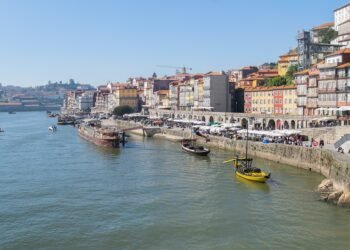
For a trip that is basically a prescription for slowing down, we love Portugal’s Douro Valley, with its terraced vineyards, river views and long lunches.
Stay at Six Senses Douro Valley, a restored manor house above the river with a big spa, vineyard walks and a very calm pace.
What travelers rave about: The views over the vineyards, the spa and the peaceful setting.
Honest complaints: It’s remote, so you’ll want a car or transfers, and it’s a splurge.
Key Features
- Study: men at high risk who vacationed more often had lower risk of death over nine years
- Study: women who rarely vacationed had higher coronary risk
- Observational findings, not proof of cause
- Trip idea: a slow wine-country reset in Portugal
Best For: Anyone who has been “too busy” for a real vacation for years.
Official site: Read the Gump and Matthews study
Book: Check rates at Six Senses Douro Valley
4. Living Abroad Is Linked to More Creativity (Lisbon, Portugal)

The hook: It’s not the passport stamps. It’s adapting to a new culture.
The viral post said travelers avoid “building anything real.” Researchers who study creativity might disagree. In Cultural Borders and Mental Barriers, published in the Journal of Personality and Social Psychology in 2009, William Maddux and Adam Galinsky found that people who had lived abroad performed better on creativity tasks. The key factor wasn’t just being in another country. It was how much people adapted to the new culture.
That detail matters for this whole debate. A quick resort trip probably won’t change how you think. Living somewhere new, learning how things work there and getting comfortable with being a beginner again seems to stretch your brain in useful ways.
Lisbon is a great place to test this. It’s one of Europe’s most popular cities for remote workers and creative people who want to try living abroad for a month or a season. You can take Portuguese classes, work from cafés and figure out the trams like a local.
Stay at The Lumiares Hotel and Spa in Bairro Alto, an apartment-style hotel with kitchens, so you can live like a local for a few weeks.
What travelers rave about: Apartment-style rooms, the rooftop and a central location.
Honest complaints: Bairro Alto gets loud at night, and Lisbon’s hills are no joke.
Key Features
- Study: living abroad was linked to higher creativity
- The key was adapting to the new culture
- Trip idea: a month-long “try living abroad” stay in Lisbon
Best For: Remote workers and creatives who want to try life in another country.
Official site: Read the study
Book: Check rates at The Lumiares Hotel and Spa
5. Working Abroad Can Make You More Innovative (Milan, Italy)

The hook: Fashion houses with globe-trotting creative directors made more creative collections.
This one is fun. In Fashion with a Foreign Flair, published in the Academy of Management Journal in 2015, Frederic Godart, William Maddux and Andrew Shipilov studied fashion houses over many seasons. Houses whose creative directors had professional experience abroad produced collections that trade experts rated as more creative. Experience in places that were culturally very different from home seemed to help most.
So if you’ve ever wondered whether a stint abroad is a career detour, this study suggests it might actually be a career advantage, at least in creative fields.
Milan is the perfect pairing. It’s a working city of designers, architects and makers, not just a pretty postcard. Go during Design Week or Fashion Week, or just wander the Brera district’s studios and galleries and see how a city full of creative professionals lives.
Stay at Hotel Milano Scala, a boutique hotel near La Scala and Brera known for its sustainability focus and rooftop garden.
What travelers rave about: Walkable location, a friendly team and the rooftop.
Honest complaints: Rooms are compact, and Milan prices spike during big fairs.
Key Features
- Study: creative directors with work experience abroad led more creative collections
- Published in the Academy of Management Journal
- Trip idea: Milan’s design and fashion districts
Best For: Creatives and career-changers thinking about working abroad.
Official site: Read the study
Book: Check rates at Hotel Milano Scala
6. Time Abroad Can Actually Change Your Personality (Seville, Spain)

The hook: Students who studied abroad became more open and more emotionally steady.
Can a trip change who you are? A German study says it can, a little. In Do We Become a Different Person When Hitting the Road?, published in the Journal of Personality and Social Psychology in 2013, Julia Zimmermann and Franz Neyer followed university students over time. The students who spent time studying abroad became more open to new experiences and more agreeable, and showed lower levels of neuroticism, compared with students who stayed home.
These are small shifts, not a personality transplant. But they’re real changes in traits that usually stay fairly stable in adulthood. That’s a lot more than you get from a TV series.
Seville is one of Spain’s classic study-abroad cities for a reason. It’s warm, walkable and built around long evenings, tapas and conversation, which makes it a great place to practice Spanish and get comfortable outside your comfort zone. Plan at least one long evening tapas crawl.
Stay at Hotel Alfonso XIII, Seville’s grand historic hotel near the Real Alcazar and the cathedral.
What travelers rave about: The architecture, the courtyard and a location close to the old town.
Honest complaints: It’s a luxury price, and Seville summers are extremely hot.
Key Features
- Study: students who studied abroad grew more open and agreeable, and less neurotic
- Published in the Journal of Personality and Social Psychology
- Trip idea: a language-learning stay in Seville
Best For: Students, gap-year travelers and anyone craving a personal reset.
Official site: Read the study
Book: Check rates at Hotel Alfonso XIII
7. Travel Can Make You Trust People More (Tokyo, Japan)

The hook: The more countries people had visited, the more they trusted strangers.
In a paper with the perfect title, Does Travel Broaden the Mind?, published in Social Psychological and Personality Science, Jiyin Cao, Adam Galinsky and William Maddux found that the breadth of people’s foreign experiences, meaning how many different countries they’d spent time in, predicted higher trust in people in general. They tested it in several studies, including experiments.
That’s a meaningful finding at a time when lots of people feel more suspicious of strangers. Seeing that people in very different places are mostly kind and helpful seems to stick with you.
Tokyo is a great first or fifth country for this. It’s famously safe and orderly, and the small kindnesses, like strangers helping with directions or a lost wallet being returned, are a big part of why so many visitors fall in love with it.
Stay at Hotel Gracery Shinjuku, a well-reviewed mid-range hotel in the middle of Shinjuku, famous for the giant Godzilla head on its terrace.
What travelers rave about: The location near Shinjuku Station and good value for Tokyo.
Honest complaints: Rooms are small, and the surrounding Kabukicho area is busy at night.
Key Features
- Study: visiting more countries was linked to higher generalized trust
- Tested in several studies, including experiments
- Trip idea: Tokyo for a first taste of a very different culture
Best For: Anyone who wants to feel a little more hopeful about people.
Official site: Read the study
Book: Check rates at Hotel Gracery Shinjuku
8. Meeting People Who Are Different From You Reduces Prejudice (Marrakech, Morocco)

The hook: One of the most solid findings in social psychology.
This one comes from a huge body of research. In A Meta-Analytic Test of Intergroup Contact Theory, published in the Journal of Personality and Social Psychology in 2006, Thomas Pettigrew and Linda Tropp combined the results of hundreds of studies. They found that contact between people from different groups generally reduced prejudice.
To be fair, this research isn’t specifically about tourism. It’s about contact between people of different backgrounds in all kinds of settings. But travel, done with curiosity, is one of the easiest ways to have that contact. Ordering food in a market, getting directions from a stranger and sharing a table with a local family all count.
That’s also a fair answer to the “monoculture” point. Yes, you can find the same coffee chains everywhere. But walk into the old medina of Marrakech and tell us the world has become one giant monoculture.
Stay at Riad Yasmine, a small, family-style riad in the Marrakech medina, famous for its green-tiled courtyard pool.
What travelers rave about: The courtyard, the friendly hosts and the breakfast.
Honest complaints: The medina can be overwhelming at first, and the riad is very popular, so book early.
Key Features
- Meta-analysis of hundreds of studies on intergroup contact
- Contact between groups generally reduced prejudice
- Not tourism-specific, but travel is an easy way to make contact
- Trip idea: a riad stay in the Marrakech medina
Best For: Curious travelers who want a real culture shock, in a good way.
Official site: Read the meta-analysis
Book: Check rates at Riad Yasmine
9. Two Hours a Week in Nature Is Good for You (Banff, Canada)

The hook: And a nature trip is the easiest way to get those hours.
In Spending at Least 120 Minutes a Week in Nature Is Associated with Good Health and Wellbeing, published in Scientific Reports in 2019, Mathew White and colleagues looked at survey data from nearly 20,000 people in England. People who spent at least two hours a week in nature were more likely to report good health and high wellbeing than people who spent no time in nature. It didn’t matter much whether the time came in one long visit or several shorter ones.
Like most studies on this list, it shows a link, not proof of cause. But it’s a pretty easy prescription to follow on a trip, and a lot of us struggle to hit two hours a week at home.
Banff, in the Canadian Rockies, makes it effortless. Turquoise lakes, mountain trails and hot springs are all a short drive or walk from town. You’ll hit your two hours before lunch on day one.
Stay at Moose Hotel and Suites on Banff Avenue, a well-reviewed hotel with rooftop hot pools and mountain views.
What travelers rave about: The rooftop hot pools, mountain views and walking distance to town.
Honest complaints: Banff is busy and expensive in summer, and parking at popular lakes is limited.
Key Features
- Study: nearly 20,000 people in England surveyed
- At least 120 minutes a week in nature linked to better health and wellbeing
- Trip idea: hiking and hot pools in the Canadian Rockies
Best For: Burned-out city dwellers who need a nature reset.
Official site: Read the study
Book: Check rates at Moose Hotel and Suites
10. Awe Makes You Feel Like You Have More Time (South Iceland)

The hook: Big views literally change how you experience time.
In Awe Expands People’s Perception of Time, Alters Decision Making, and Enhances Well-Being, published in Psychological Science in 2012, Melanie Rudd, Kathleen Vohs and Jennifer Aaker found that feeling awe made people feel they had more time available. People who felt awe were also less impatient, more willing to give their time to help others and more likely to prefer experiences over material things. It also gave a short-term boost to life satisfaction.
That last finding is almost too perfect for this debate. Awe makes people value experiences more than stuff.
Few places deliver awe on demand like South Iceland. Waterfalls, black sand beaches, glaciers and, in winter, a decent chance of northern lights.
Stay at Hotel Ranga, a countryside hotel near Hella with outdoor hot tubs, an observatory and a northern lights wake-up call service.
What travelers rave about: Northern lights views, the hot tubs and the remote setting.
Honest complaints: You’ll need a car, and Iceland is expensive.
Key Features
- Study: awe made people feel they had more time
- Awe also increased patience and willingness to help others
- Trip idea: waterfalls, glaciers and auroras in South Iceland
Best For: Anyone who feels like there’s never enough time.
Official site: Read the study
Book: Check rates at Hotel Ranga
Want more trips like this in your inbox?
Join the Listicle Queen list for new lists, deals and dream-trip ideas. No spam, unsubscribe anytime.
The Honest Fine Print: Vacation Benefits Fade
We promised no hype, so here’s the catch. A 2009 meta-analysis by Jessica de Bloom and colleagues, Do We Recover from Vacation?, published in the Journal of Occupational Health, found that vacations do improve health and wellbeing, but the effects tend to fade within a few weeks of returning to work.
The fix isn’t to stop traveling. It’s to travel more often, even in smaller doses: long weekends, short breaks and trips you look forward to all year.
Quick Selection Guide
| If you want to… | Try this trip |
|---|---|
| Spend on memories, not stuff | Kyoto, Japan |
| Have something to look forward to | Finnish Lapland |
| Finally take a proper rest | Douro Valley, Portugal |
| Boost your creativity | A month in Lisbon, Portugal |
| Find career inspiration | Milan, Italy |
| Grow as a person | Seville, Spain |
| Feel more hopeful about people | Tokyo, Japan |
| See a different way of life | Marrakech, Morocco |
| Get your nature fix | Banff, Canada |
| Feel tiny in the best way | South Iceland |
FAQ
Is travel just a form of consumption?
Some travel can be, especially rushed, box-ticking tourism. But research on experiences, anticipation, living abroad and awe shows travel affects happiness, creativity and how we see others in ways that buying things or watching TV doesn’t.
Does science say travel makes you happier?
Studies suggest experiences make people happier than material purchases, and that people with a trip planned are happier than those without one. The boost after a trip usually fades within weeks, so frequent trips help.
Is travel good for your health?
Long-term studies have linked regular vacations with lower risk of death in men at high risk of heart disease and lower coronary risk in women. These studies show links, not proof. This is not medical advice.
Does travel make you more creative?
Research by William Maddux and Adam Galinsky found that living abroad, and especially adapting to a new culture, was linked to greater creativity.
What kind of travel has the biggest benefits?
The studies point toward slower, more immersive travel: living abroad, spending time in nature, meeting people from different backgrounds and seeking out awe-inspiring places.
Keep Reading
- 10 Best Spas and Wellness Retreats for 2026
- 10 Best Desert Wellness Escapes
- 10 Best Converted Building Hotels for 2026
- 10 Best Boutique and Design Hotels for 2026
Details checked in October 2026. Where we could not verify a price, we link to current listings instead of quoting one. Prices, schedules and offers change, so check the official site before you go. Some links are affiliate links, which means we may earn a commission at no extra cost to you. As an Amazon Associate, we earn from qualifying purchases. This article is general travel information, not medical or safety advice.